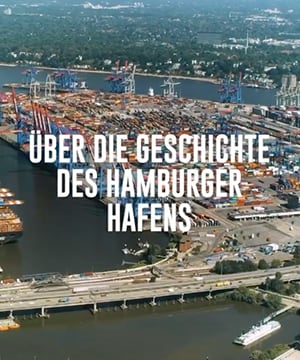

The Port of Hamburg is taking advantage of the opportunities presented by the energy transition and positioning itself as a sustainable energy hub. Companies operating in the field of sustainable energy sources will be prioritized. In addition to storage, processing and refining, this also includes suppliers, service providers and manufacturing companies of systems and technical equipment for sustainable energy sources.
The Sustainable Energy Hub is mainly located in the port areas in Neuhof, Hohe Schaar, Moorburg and Harburg with large-scale industrial and terminal companies with sufficient distance from residential areas and good network infrastructure (electricity, pipelines).
Press reports
Initiative „Sustainable Energy Hub Hamburg“: Hamburger Hafen wird zum Standort nachhaltiger Energie
Port of Argentia and Hamburg Port Authority Joint Press Release: Ports Sign Letter of Intent to Collaborate on Green Hydrogen Transport
Downloads
Sustainable Energy Hub Hamburg DE
Flyer Sustainable Energy Hub
Sustainable Energy Hub Hamburg EN
Info Sheet Bunkering DE
Info Sheet Bunkering ENG
Info Sheet Bunkering Barkassen
Port Bunker Map
Port Readiness Level
Waiting Berths for bunker vessel
GGBVOHH
Hamburg Port Authority AöR
Jannes Elfgen
Head of Port Energy Solutions
Mail: jannes.elfgen@hpa.hamburg.de
Neuer Wandrahm 4, 20457 Hamburg
Mail: SustainableEnergyHub@hpa.hamburg.de
To ensure that this development progresses as efficiently as possible, Hamburg Port Authority gave the starting signal for the “Sustainable Energy Hub Hamburg (SEH)” initiative on October 9, 2023.
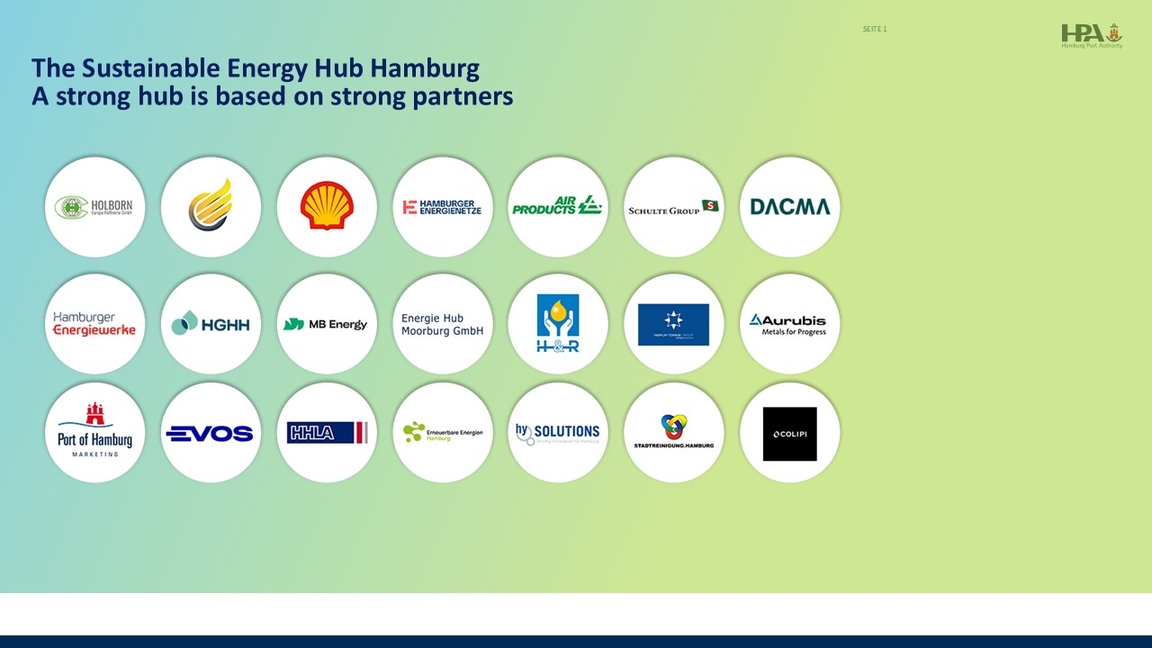
There are many companies that are already based in Hamburg, such as Mabanaft, Hamburger Hafen und Logistik AG (HHLA), EVOS Air Products, Green Ports Hamburg, Hamburg Energiewerke, Gasnetz Hamburg, Shell, Holborn, H&R Schindler, LOTHER GRUPPE, Energie Hub Moorburg GmbH and Hamburg Green Hydrogen Hub.
On the one hand, the initiative has set itself the goal of better networking between port companies. On the other hand, it would like to raise public awareness of Port of Hamburg as an energy port, because the transition to sustainable energy will be the dominant topic in the coming years and decades. The initiative aims to create an ecosystem that facilitates collaboration in the Port of Hamburg.
For example, it should be possible to coordinate infrastructure needs among those involved. To achieve this, information should be exchanged, win-win projects identified, and network expansion planned in a timely and needs-based manner. In this way, companies can use synergies and pool their interests.
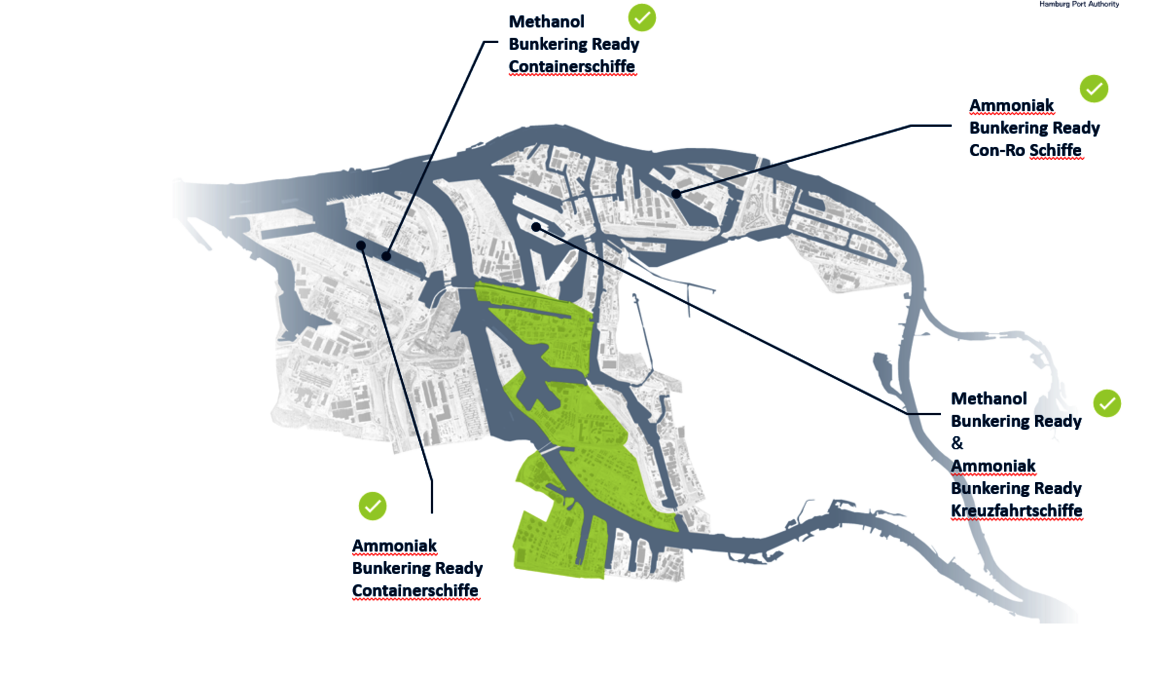
Green Shipping is an essential element for becoming a climate neutral port. Together with private stakeholders, HPA takes pro-actively responsibility and supports the establishment of alternative fuel infrastructure in the port of Hamburg.Tanker Port areas are already bunker-ready in the port of Hamburg for any alternative fuel. Biofuels are locally available and being bunkered regularly.
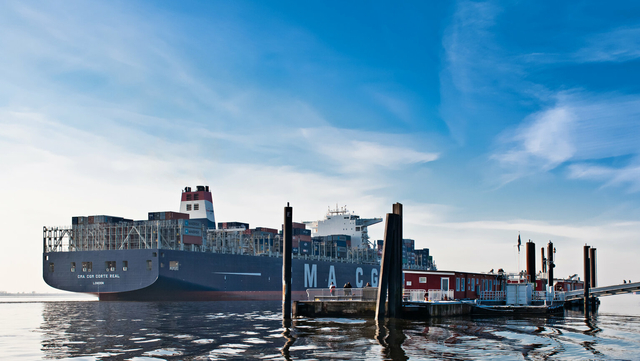
The exchange of hydrogen Multiple Energy Containment Systems (MECS) is legally allowed all over the port. Moreover, HPA pro-actively takes care of establishing additional approval requirements for bunkering of alternative fuels, as current law requires an approval for bunker processes with alternative fuels with flashpoint <55°C. Cruise vessels, feeder vessels as well as any smaller ships can already bunker methanol landside or waterside at Kronprinzkai berth. From Q2 2025 onwards, also container vessels will have infrastructure available for waterside methanol bunkering.
Further methanol bunkering berths will be established, as well as ammonia bunkering options until 2030, so that any vessel type is able to bunker any alternative fuel in Hamburg.
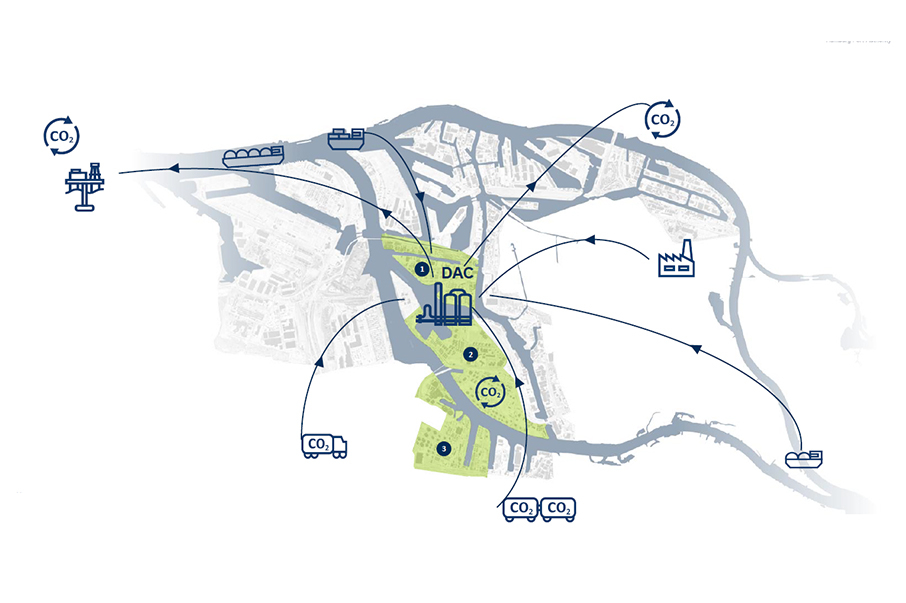
Industries that cannot avoid CO2 in their processes will have to capture these emissions using carbon capture technology in the future. In maritime shipping, carbon capture technology is also already in its initial pilot phase. The Port of Hamburg is positioning itself as a key transshipment hub for these captured CO2 emissions.
The existing CO2 terminal operated by Evos can be scaled up to handle additional CO2 volumes. Thanks to Europe’s largest port rail network, Hamburg is ideally suited for rail delivery of CO2. Support is also being provided for potential future delivery via inland waterway vessels. Infrastructure for collecting CO2 captured from ships via barge is being actively pursued. Seagoing vessels will facilitate transport to offshore storage sites. Due to sustainability considerations, the focus is also on utilizing suitable CO2. This will be made available via the Port of Hamburg for potential reuse in the circular economy, such as in methanol production, as well as for permanent applications, e.g., in the plastics industry. An initial direct air capture pilot plant in the port will supply additional CO2 volumes for this purpose.
In collaboration with other ports and market participants, we aim to overcome the hurdles of market ramp-up and, as an enabler and through our network, support the establishment of a carbon capture CO2 logistics chain in the Port of Hamburg.